




As we celebrate World Wellbeing Week, we’re reflecting on how offices can support wellbeing. While much of the initiative focuses on how organisations support mental and physical health day-to-day, one factor that often sits in the background is the office itself.
The environments people work in shape how they feel and how they perform. Offices are no longer just backdrops for our everyday, instead they are having a huge influence on how people move through their day, from how easily they can focus and move around, to how they interact with others.
Recent findings from Gallup’s State of the Global Workplace 2026 report highlights exactly what workplaces face when it comes to supporting the wellbeing of its employees. Only 20% of employees globally reported feeling engaged at work, with disengagement continuing to affect performance.
When people feel connected and supported, it becomes much easier to sustain focus and motivation. At Wellington Place, we believe that thoughtful design focuses on reducing that friction by considering how spaces are used in practice. So, how can offices support wellbeing and drive productivity?

Designing with people, not just for them
The most successful places are shaped by the people who use them. This means creating environments that reflect how people work and evolving them over time through feedback, observation and day-to-day use.
At Wellington Place, this is reflected in the range of office space available and the diverse mix of occupiers across the neighbourhood. Many offices have been designed to include features such as quieter areas that support focus, individual pods for calls or even larger co-working desks. Similarly, social space and breakout areas designed to be bigger, allowing more chance to ‘collide’ with colleagues. Providing this level of variety gives people options over how they structure their day, which helps them manage both concentration and energy more effectively.
Hybrid working has also changed expectations of the workplace. It’s no longer the only place where work happens, but it still plays an important role in supporting activities that benefit from being in the same space, such as collaboration, shared experiences and relationship building.
Creating environments that bring people together while still allowing flexibility in how those spaces are used is crucial to supporting wellbeing in 2026. Not everyone works in the same way, so it is important that the workplace can accommodate different routines, preferences and ways of engaging to best support our people.
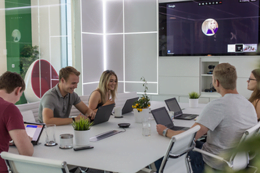
Supporting connection through shared space
With that, everyday interaction plays an important role in how work gets done. While formal meetings are necessary, many useful and meaningful conversations happen informally, between tasks or in shared settings.
Providing different community spaces supports this by bringing people together in a way that feels natural, rather than forced. It creates opportunities to listen to different perspectives and to build relationships that extend beyond immediate teams, which over time, can build stronger collaboration and a more connected working environment, both contributing to supporting individual wellbeing.
On one hand, this can be seen through shared spaces, but it can also be in forming a regular programme of activity designed to support this rhythm of interaction. Whether it be webinars, focus groups or networking opportunities, the emphasis should ultimately be on creating opportunities for engagement that people can choose to take part in on their own terms, rather than prescribing how they should connect at work.

Wellbeing and performance
Gallup’s data shows that engagement and wellbeing often move together, reinforcing the clear link between how people feel and how they perform. When people are comfortable in their surroundings and able to work without unnecessary barriers, they are more likely to maintain consistent performance.
For this reason, elements such as air quality, lighting and access to outdoor space are increasingly built into workplace design. Standards such as Fitwel provide a framework for delivering these consistently, helping to create environments that support both physical and mental wellbeing.
These features are often subtle, but they shape the overall experience of being in a place and contribute to how sustainable it feels to work there over time.

Looking ahead
Wellbeing is shaped by how people experience their working environment and how well that environment continues to support them over time.
By focusing on the everyday experience of people using a space, thoughtful design and programming helps bring these factors into sharper focus. It brings together community and ongoing feedback to create environments that can adapt and remain relevant as needs change.
At Wellington Place, this thinking continues to guide how we evolve, with a focus on supporting wellbeing, engagement and effective work in equal measure. As World Wellbeing Week highlights the importance of healthier working lives, it also offers a timely opportunity to consider how the places we work in contribute to that.
To find out more about what’s coming up at Wellington Place, click here.